“Chaos is not completely random, rather, it’s a complex arrangement of choreographed order that’s articulated through different activation levels.”
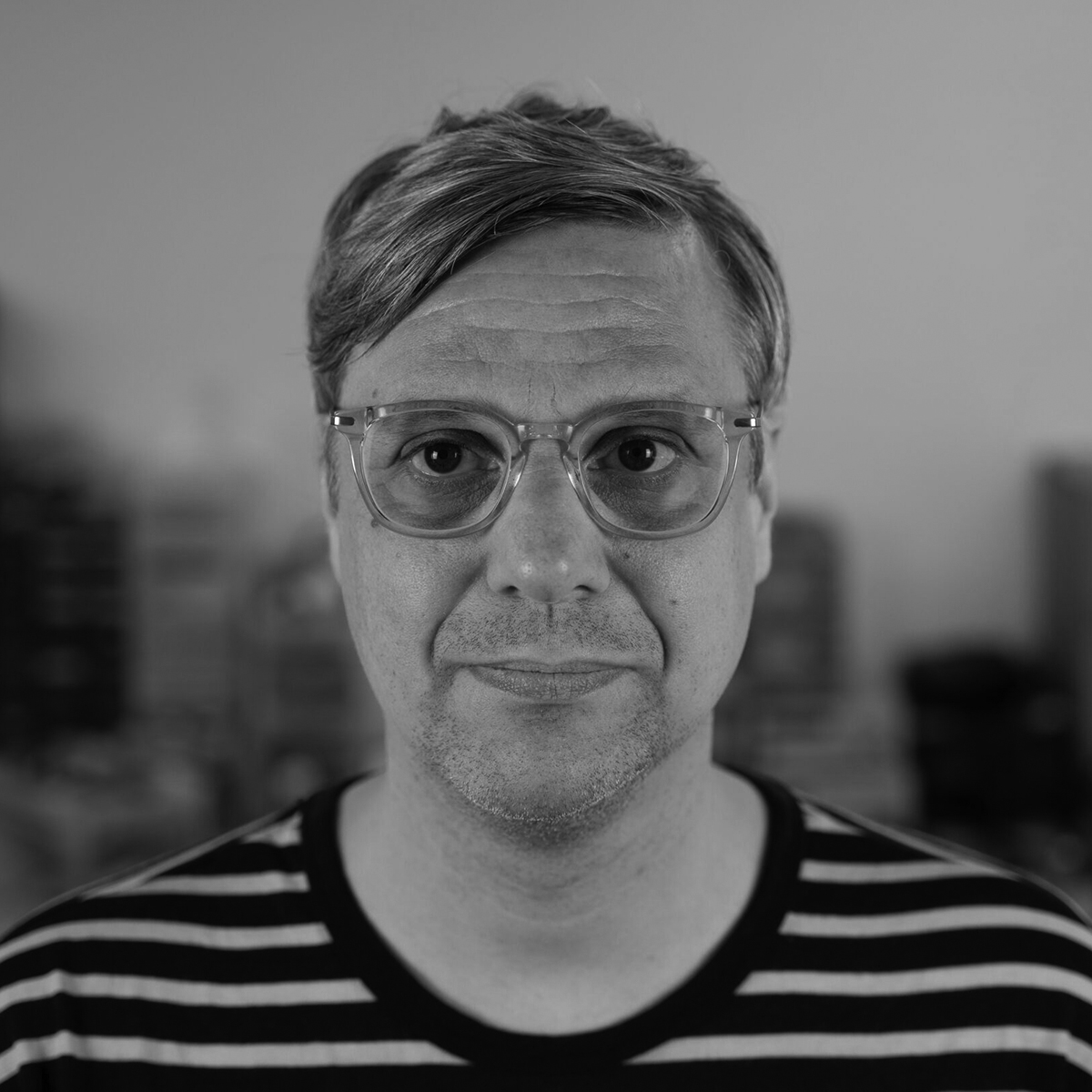
Ralf Baecker is a German artist working at the interface of art, science, and technology. Through installations, autonomous machines, and performances, he explores the underlying mechanisms of new media and technology. His objects perform physical realizations of thought experiments that act as subjective epistemological objects, posing fundamental questions about digital technology and complex systems and their sociopolitical entanglements. His projects provoke new imaginaries of the machinic, the artificial, and the real. His practice is a radical form of engineering that bridges traditionally discrete machine thinking with alternative technological perspectives and a new understanding of self-organizing principles.
Ralf Baecker: I went through your curatorial text, David. It’s a nice wrap up of the field, and addresses a lot of questions, topics, and concepts that are important to me.
David Familian: I have one question, just to start with. To see if it’s the same in Europe, the discrepancy, the separation between the sort of the humanities approach to cybernetics and their interest in cybernetics, and that discipline-based scientists are not even aware of cybernetics, or they think it’s old history.
Ralf Baecker: I think it’s probably the same. The last scientific institutes that were called cybernetics also vanished or died in the ’70s, must be around that time. It somehow became a part of engineering, not a systems engineering, but more like, feedback driven control systems, which is a very applied understanding of cybernetics without its system or philosophical or worldview implications that we might have, right? And I heard about cybernetics as a term when I started to study at the art school, before I studied at a computer science program, so cybernetics was not a term used, you know, it was more like, for me in the beginning, it was a very esoteric science, from the ’60s, ’40s, ’50s. So I got into it like in the early 2000s, from a professor who was teaching, you know, programming and technology in context of an art school.
David Familian: I mean, for me, I started by looking at the science. And then, when I got Yuk Hui’s book, Cybernetics for the 21st Century (2024), which initially just made me interested in the term recursivity and contingency. When I showed computational based media, like images generated in the ’70s, computational drawing, and poetry, but then when I started reading it, there’s all the cybernetics, and I remembered all Katherine Hayle’s mention of it, and when she gave her talk in Yuk Hui’s conference on cybernetics in the 21st century, she said there’s one school remaining, it’s in Australia, that’s actually called cybernetics.
And also, to me, cybernetics was the first sort of transdisciplinary idea, and it spun out, like you said, all these departments, you know, all these different disciplines in computer science and engineering, and no one really knew about the biological stuff, unless you knew the British people, which didn’t get as much publicity.
Ralf Baecker: We were big fans of like this biological computer lab that was run by Heinz von Foerster, this Austrian guy. And also then the British school like Gordon Pask and Ashby and so on, and Stafford Beer, so these were kind of also interesting figures, like this is second order or cybernetics thinking where it went beyond building war machines or optimizing.
David Familian: Yeah, it was all machine operations, and then Roy Ascott was the kid, probably, amongst all those people when he was in art school.
I’m giving a paper at the American Society of Cybernetics in June, and that’s one of my points I’m going to bring up, is how we can reach out more to the scientists. I expect there’ll be scientists at this. So it’s going to be an interesting conversation because you’ll have scientists say, “no, we understand cybernetics.”
So the first question is about the idea of uncertainty. I’ve also just become aware of this guy, Donald Schön, another ’70s person who wrote a book, Beyond the Stable State, and he talks about that uncertainty is a time where there is no science, we have to discover the science, so it goes beyond Kuhn, but on the other end, it’s like, the uncertainty when you look at your piece. Or aspects of your piece that are uncertain.
Ralf Baecker: I started working a lot with software inside closed computational spaces, and I was looking for kind of connecting algorithmic systems to the world basically, and to add like this uncertainty to my artworks, right. And sure, there’s a way of sampling the uncertainty of events that are unpredictable, and feeding them into the machine. So that was one approach. But then it was also a way of finding a radical openness towards building machines. So not building up on available computers, and to build my own universe of computational machines, and to design them very open and in a way where the openness is sensitive to its environment, and also the term uncertainty and unpredictability, they are very close, at least from my perspective, and it’s sometimes hard to distinguish them.
And how do you see that? What would be your, take?
David Familian: Well, the first thing I like, that I know a lot of people are talking about more now than they did when probably you started, is bringing in randomness from the outside world, not generating it by what’s built into a computer. That seemed to be what you were saying. It’s sort of Jens Hauser’s idea of the intersection between wet and dry is when you bring some of the wet into the dry, or Roy’s idea of moist media. I think uncertainty is a little more poetic than unpredictability.
I also think it carries a deeper, like Schön, when he’s using the word uncertainty instead of unpredictability and saying, in society, when there’s uncertainty, it’s a societal character, you think of people being uncertain, whereas a computer is unpredictable, or nature is unpredictable. Yes, we’re unpredictable too, but it’s a feeling that goes back to the original idea of the show. When I talk to the artists that we commission works, and when I was picking artists, I said that I want the visceral feeling of order and disorder to be in the works, and that provokes uncertainty in a human being. So to me, it’s a more human characterization. A computer can’t be uncertain.
“I was looking for connecting algorithmic systems to the world, and to add this uncertainty to my artworks. It was a way of finding a radical openness towards building machines—to design them in a way where the openness is sensitive to its environment.”
Ralf Baecker: But the uncertainty is like a more complete understanding. With predictability, there’s already, maybe a path or different paths indicated. It’s not as radical as uncertainty, which, you know, can be more dramatically open.
David Familian: Yeah, and then you have the whole issue with probability built into unpredictability, that the way we understand unpredictability, is by sampling and making bell curves and all kinds of representations of that unpredictability to make it more understandable.
Gabe [Gabriel Tolson, curatorial assistant] is asking how does uncertainty begin, and Schön is basically saying, and I think it’s my point too, is we can no longer look at the world as certain. We are unable anymore to create a sort of homeostatic illusion that science was able to do really since Newton, I guess you could say. You know, a science without entropy—another definition of Newton which I’d never heard. The problem with Newton is he doesn’t account for entropy in his predictions. The planets have a four-million-year unpredictable window. All systems are predictable within certain timeframes. I’m curious if you agree.
Ralf Baecker: Yeah. I mean, there are very obvious examples now, like that we push our climate system closer and closer to its tipping points. What will happen if the Gulf stream breaks down? It’s really uncertain, what’s going to happen after that. A lot of people have a really hard time thinking about what a tipping point is, or how a complex system will turn into something else and what dramatic change this can have on specific areas on planet Earth.
David Familian: I’d really like to figure out a different term. The minute you say complex systems, people sort of glaze over when you try to explain it. And then in the popular culture, what happens is they’ll be talking about the weather or social media and say, “well, it’s very complex.” But they never talk about the underlying structure of what that actually means. Bruno Latour said, we’ve made global warming such a big issue, it’s so overwhelming, we feel powerless anyways, so we don’t even know what to do, you know, even if you drive an electric car, it has its own pollutants. Everything has something. I think we agree that we can’t avoid complexity anymore. The next question was about emergence, and new patterns of behaviors, and how you see that in general and how it appears in your work.
Ralf Baecker: Because there is no randomness in the machine or computational randomness, I started to use Geiger counters, these tubes that detect particles that create an event, which is totally uncertain. It’s unpredictable what’s going to happen, and I use this as a source for entropy that I feed into the system. The idea, which directs into the concept of self-organization, is that I drive the system with noise, with randomness, and I use the noise as a catalyst in order to create emergent structures. This was informed by, on one side, Heinz von Foerster’s concept of self-organization, where he proposes, ‘okay, make a little box, put little cubes in with magnetic surfaces, and shake the whole thing, and through that, certain crystal-like structures emerge.’
And this was the starting point: building a system that has structure, that has loose couplings between different agents, and then feeding it with randomness and seeing how specific patterns emerged. As an artist, designing emergent systems is almost impossible, since emergent systems result from something that happens by chance or that are there in nature or in the world, and that exist without a designer that has designed an emergent system. And this was a closed feedback process. I’m trying to enable the system to form structures, and then changing parameters. And so it became an impossible task of creating an emergent system through a design approach, or an engineering approach.
For me, emergence is super interesting. I approach it a lot in my practice. But it’s kind of a paradox, a little bit, designing emergent systems, because they are usually the result of long, long time scales, and long time scales that are not designed, that are just there.
David Familian: Right, but your piece isn’t affecting the Geiger counter. True emergence is an interaction. Emergence usually forms within a system that’s feeding back and forth. So if somehow your sculpture influenced the Geiger counter, then you may have true emergence.
Whenever I have an artist that says they’re using generative algorithms, I always ask first, what’s your fitness? And some of them look at me like I’m crazy, and then I go, is it just the system that is using the algorithm, or is the algorithm affected by something outside of itself, because that’s how emergence occurs. So I agree with you that if there was a way for your piece to influence the Geiger counter or the source of the randomness, you probably would get something more akin, but that takes a long time.
Ralf Baecker: But the emergence happens on a different scale. The basic construction of the work is that there are two opposite motors that pull against each other. And I have 190 of them, and they’re pulling each other like a tug of war. One is on, and then other one is off.
Each cord is connected to its neighbors through an elastic band. So there are certain moments where there’s a momentum where by chance, maybe two or three of them tend to go up, and there’s a momentum where the whole area of loose coupling creates this greater upwards movement. This is, for me, the emergent moment. And because the system itself probably can’t feedback on the Geiger counters because there’s no radioactive or heavy particles floating around, but there’s feedback between all the agents along the sculpture. They were influenced by the Geiger counter activity that adds another force, or sends another moment of activation into the system. And then there’s an ordering suddenly happening.
It’s like having sand on a plate with a speaker on it. And cymatic shapes form there through different levels of activation, which is also an emergent thing. You can’t foresee what’s going to happen if you set the thing in motion. And then you can only see what’s really happening if you turn the thing on, which is also sometimes in computers, you have the cellular automaton. If you look at the rule of the cellular automaton on one state, you don’t know what’s happening, but if you run it, you have this emergent behavior inside such a simple system as a one dimensional cellular automaton, like the Wolfram machine, for instance.
“Chaos is something that we have to embrace. We are deeply entangled particles in these complex systems. And we often try to get rid of noise, when it drives self-organization.”
David Familian: Right. We can’t individualize each molecule because the spins affect each other. And it can be local, and not throughout the whole liquid or whatever it is. The next question is the ultimate: would you agree that none of the vitality of any of these systems can exist without feedback?
Ralf Baecker: Yeah, and then there are many levels, right? There can be local feedbacks within system that starts to resonate in a way, or then in a larger scale, you have another feedback. In most cases, I think we talk about negative feedback, this feedback that creates stability, like the thermostat system, which is primarily used in the system. Small local feedbacks, and the balancing of the system, or that certain things, if they run over a set limit, and then decelerate certain parts and then drive it down and such.
I try to translate an engineering or a technological language into a poetic language, and turn it into performative complex systems. Feedback is the core of that language, the smallest unit of the system. It’s microscopic and it exists in digital measuring and controlled circuits and so on and in the mechanical and, and, and so on.
David Familian: In one of my readings, one of the economists began to look at economics as a complex system, and he brought positive feedback into his system. And he said that a good example of positive feedback is computer technology, and how positive feedback has made it change and grow, and it has not followed the traditional life-death cycle of traditional technologies within the economics, and he would have fights with his colleagues that they would argue there is no positive feedback. And also, one of the things you said, was that there’s also regulatory feedback, which I learned relatively recently that has a very discrete purpose like, hormones in our bodies, that control one hormone based on what input they get.
So you’re right. I agree. Feedback happens at all different scales. And it’s not something you can isolate, because these many registers all feed off each other. You can look at them as being isolated, but ultimately there’s a dynamics between them.
Ralf Baecker: That was also the problems of first order cybernetics: you, as a scientist or observer, were already influencing the system, and then the second order was kind of inserting yourself as an observer in the system. By looking at it, by conducting it and interacting with your experiments, you are already changing it.
David Familian: And then finally, another element that’s part of the vitality of complex systems is the element of chaos. It’s another term that gets misunderstood, because people think of biblical chaos, which isn’t what this is. What’s interesting about the term self-organization is that Ashby didn’t like that term. He wanted to call it contingent, and I think it’s interesting that that word has popped up now as a term that may be replacing self-organization in some way that, but he immediately, he felt it didn’t reflect the rules behind self-organization.
Ralf Baecker: Yeah, but you used to actually build this as a homeostat, like the self-stabilizing system. And he was, interestingly, in a dispute with Turing at that time. Turing was like, ‘We build the universal machine that solves all problems.’ And Ashby was like, ‘Oh, we built this one, this dedicated machine,’ and so on.
Chaos is highly ordered, in a way. People think it’s just noise or disruption. But chaos itself is like an odd structure that somehow changes its way of expressing itself at different levels of excitement or energy. Like water that runs down the river, it builds waves behind it. And then if the energy is increased the wave might turn into something flat suddenly, and then more energy, and then suddenly they build another complex wave in the river. It’s not completely random, rather, it’s a complex arrangement of choreographed order that’s articulated through different activation levels.
David Familian: Well, it still has a pattern. There’s a record, especially with water. It’s chaotic, but you see patterns, you see structure. It’s interesting how all these terms, whether it’s complex systems or chaos, really, confuse people in a lot of ways. And that’s one of my things about the show, and about my writing in general: how do we make this all understandable in a way that doesn’t sound like we’re explaining a scientific concept? Because it’s actually a very poetic process, and it’s about life.
Ralf Baecker: Chaos is more something that we have to embrace. We are deeply entangled particles in these complex systems. And there’s chaos, and there’s noise. And we often try to get rid of noise. We try to get rid of the disruption in the system, but they are often also in connection to processes of self-organization.
They are the thing that make it. You have to push the system, or something in it, in order for it to unfold, and restructure and build. Like birds flocking around, and some little irritation suddenly makes them move into a different direction. One unconscious movement of one of the birds, and suddenly the whole flock, goes into a new direction very beautifully. This is the beauty of noise, or chaos: it creates change that can be applied in a cultural or a political way.
“You have to push the system in order for it to unfold new behaviors. Like birds flocking around, and some little irritation suddenly makes them move into a different direction.”
David Familian: Well, I think what’s interesting, is that repressive governments try to control the chaos and get rid of that voice in society. That’s what they propose. And become seductive to a certain portion of the population that both, your country [Germany] is feeling and we’re feeling also is this wanting to get rid of the chaos and uncertainty. The question will be, by China retrenching back into a more repressive culture, will it lose something that it gained through expansion of a hybrid capitalist-communist model? It’s going to be interesting, because it definitely didn’t work for Russia.
You hear people all the time say can’t we get rid of some of the chaos in our society—but chaos is the thing that’s good about society!
Ralf Baecker: And I understand that people are kind of struggling with it. Sometimes I’m teaching in art school. Sometimes I want all control: let’s do things super structured. And then students bring in disruption, and things happen, and we kind of end up somewhere else completely. And that’s something to embrace. This can happen in all parts of science and society. It’s hard to gain new ideas, concepts and perspectives in a very harsh, or in a very controlled and repressive society. It needs space for radical change.
David Familian: I mean, it’s going to be interesting, with all that’s going on in the academic world in China. Will that become a threat to the government, these kinds of ideas, or will someone suddenly say, ‘look what’s going on. Something’s not happening that was happening 20 years ago.‘ I think the difference between China and Russia is China actually produces things that the world wants. Whereas Russia never produced anything the world wanted, really.
Ralf Baecker: Yeah, but they produced so many beautiful things, like a trinary computer.
David Familian: A certain amount of chaos is allowed in science that they don’t let exist anywhere else. Where chaos is allowed, things do happen.
We’ve talked about real world complex systems in our conversation. When you perform, or when you see people view your work, do you find that they come away with a different sense of uncertainty? Or do you, think you’re speaking to the converted, usually that already understand.
Ralf Baecker: I think so. There are moments of insight, and I have this experience often, that people spend lots of time there and get intrigued by it, or start to interpret things and make connections to the world. And I think this is due to its structure, or how it articulates itself through this noisy soundscape and this contrast between super high oscillations in the machine and the small movements of people. People are triggered, and their brains start to make connections. I like when people start to interpret and to make their own story. You can go super close into the details, look at one or two individual things and maybe understand something, and then you go back and you see the whole landscape changing in two different scales of the same process, through this openness of the machine.
I call it performative complexity. When people deal with complex systems, they are, because of the timescales, often just confronted with one state of it, but which has a long history to get there. The idea is to have different states, to look into. Something that looks steady and stable, but that has this vibrance on the other side that illustrates the process, that indicates the many thousands of little steps that formed this thing. This is what I want. On one side, offering specific things that people can understand, but also kind of being a little bit puzzled by what’s happening. To keep people in between these two states of understanding.
David Familian: Barry Richmond, who originated systems thinking, wrote that we must see both the forest and the trees, and that’s what I think your work does. Instead of that sort of thing where you look at a cube and see it from one angle or the other or some optical illusion, there’s more simultaneity between the forest and the trees when you look at this work, especially because it can happen so fast that the processes get blurred together, depending on how you’re looking at it.
The next question is, what’s the visceral experience? What I think it is with your piece is going back and forth, as if you looked at a forest and the trees, but you saw the trees growing and sped it up, so you can see the forest as a living thing. And I mean, the trees are alive. And then the whole forest. That’s sort of what your piece does. It speeds feedback up. Like you said, there’s not a delay between the affect and effect.
Gabriel Tolson: We’d love to know how you came to emotionally connect with complexity and systems thinking.
Ralf Baecker: It’s hard to say. In my art school, there was a Professor who invited one of these early chaos theorists, Otto Rössler, who came up with this concept of attractors and I heard a lecture from him about chaotic systems. I think that was in the middle of the 2000s, like 2005, when the term chaos theory was still a thing, and now it’s been replaced by complexity theory, or complexity research, in order to get rid of this esoteric notion of the term. That’s when I came across it. It was primarily like attractors or building electronic circuits that perform these complex attractors.
David Familian: I think that’s interesting because we all heard of chaos before complex systems because of James Gleick’s book, Chaos: Making a New Science (1987). People think chaos is this separate thing. It’s whether they conflated complex systems with chaos, or they thought chaos was its own thing, and it’s part of something. Everything’s part of something. That’s sort of the problem. Gleick made chaos its own thing. It’s only a small part but it’s not necessarily even the most important of complexity. Feedback to me is more important. There is no chaos without feedback. The cascading effects of feedback creates some of the chaos. They came up with all these wonderful terms to visualize chaos that made it understandable, but actually it just confuses, it doesn’t really help.
Ralf Baecker: One example that always comes up with chaos is this double pendulum, where small changes in the starting parameters will create completely new, different behavior.
David Familian: Scientists don’t use chaos. They say deterministic chaos, because it’s not truly random or unpredictable. And once you started going, if you have the right formula, it will follow that track. It’s just the initial conditions. The initial conditions are unpredictable, but once it starts, the system becomes predictable.
Ralf Baecker: Where my interest started was probably through the cybernetic perspective, and also through modeling these things digitally, you know, writing all the classical algorithms. So looking at cellular automatons, building, programming flocking algorithms and chaotic attractors, or programming a double pendulum. All these things where you, try to find the unpredictability in the machine, exploring the seemingly infinite possibilities of the computational space. And that was kind of a thing that I did in 2003. I did a lot of things with visuals and generative artworks. And then the translation from the computational closed Turing space into physical sculptural objects, I think that was for me the important step to go out of the computational space. I’m not interested in the images that the machine produces. I’m interested in what’s happening inside the black box of the machine.
That was for me the important step in my artistic practice. And then the performativity of what is inside the machine. Because there was like, there was software art and computer-based art. Software art could be super conceptual, but you always are confronted with the output of the system. The most radical form of software is showing a computer running software without a screen, just running inside the machine. And from that thinking, I came across like this. I’m building on my own computer, but I built it really badly. And in a way, that it opens up space for uncertainty, you know, and, like with the kinetic art of the ’60s, like Jean Tinguely, who said, “I take the machines from their slavery in the industry, and put them into an artistic context.” And this was also to take them from their terrible jobs in finance and offices and free them.
David Familian: Were people you went to school with at the time looking at things? Was it sort of divided between who wanted to make more physical systems and who was making computer-based artwork? I’m thinking about Simon Penny, who teaches at Irvine, and he was making art that probably had an influence in your generation.
Ralf Baecker: I studied at the Academy for Media Arts in Cologne, and there was a group who kind of did that, like going from the, from the digital into the physical realm. Also in Berlin, Joachim Sauter and Art+Com had a new media class at the University of the Arts in Berlin, and they also started trying out things like this, but in a very controlled way, so they often went like, ‘Let’s take a digital signal and add it to the motor and build a three dimensional thing that represents something in the digital space.’ I don’t know, having two hundred little spheres moving up and down to create something that looks like a car, right? Taking the digital pixel into the physical pixel.
David Familian: I think this is an interesting point, this shift that some people made, because I think about my own understanding of the history of digital media, and, I don’t think until I started looking at complex systems, did I start to see there’s another whole approach here.
But some of it had to do with working with Jens Hauser on a bio art exhibition, even though we had this sort of tension because I was showing dry art. In his sort of condescending way, he made me aware of that. But then I think, going to complex systems and seeing that there’s this whole thing that opened up that I’m noticing now that I don’t think I noticed when I was looking, say, at, computational work from the ’70s, or Vera Molnar, or generative word based work, that is sort of what you’re saying.
It’s still that it creates unique outputs, but it’s not what we’re talking about. And that divide is an interesting thing when you go beyond just physical computing. But I think the term is—you go from physical computing to performative computing. And the people doing physical computing think it’s performative. But it really isn’t.
Ralf Baecker: Usually, you have a black box, which is computing, and then you send the stuff to whatever is out there.
David Familian: But they think it’s a performance. They think because it’s performing, but it’s not really.
Ralf Baecker: It’s only one directional. My idea is to create interactions in the material itself.
David Familian: Well, I think that’s a perfect ending. I think we got it. That’s really good.